
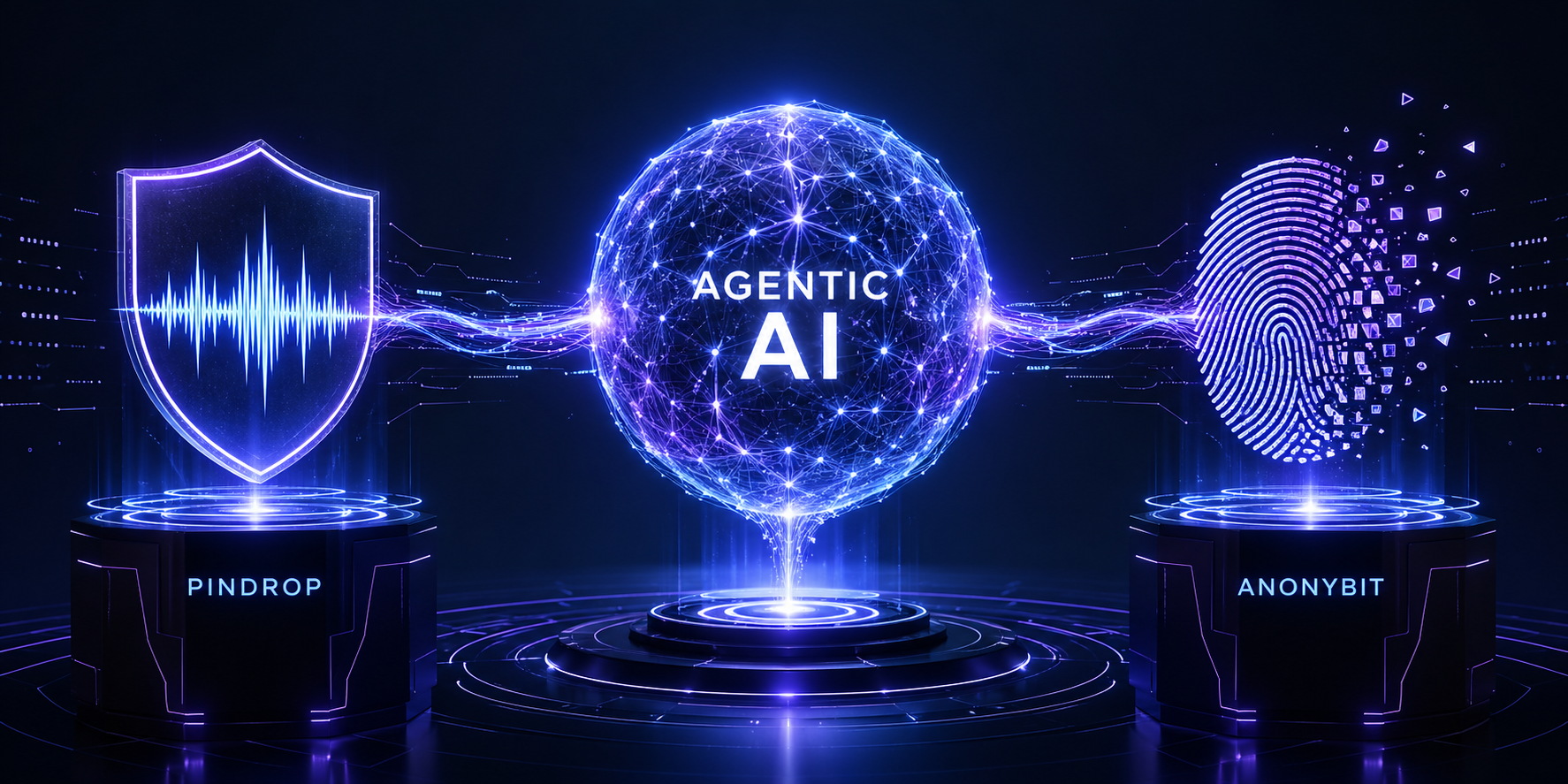
In the rapidly evolving landscape of 2026, Agentic AI, Pindrop, Anonybit have emerged as the “holy trinity” of secure autonomous systems. As AI agents become more autonomous, handling everything from financial transactions to sensitive data access, the traditional methods of static passwords and simple multi-factor authentication (MFA) are no longer sufficient.
By integrating Agentic AI with the fraud-detection power of Pindrop and the privacy-preserving biometric infrastructure of Anonybit, organizations are building a “trust-first” layer that effectively neutralizes deepfakes and identity theft in real-time.
Table of Contents
How the Synergy Works (Agentic AI Pindrop Anonybit)
The strength of this trio lies in their complementary roles. While an AI agent executes tasks, it needs a way to confirm it is acting on behalf of a legitimate, verified human.
- Pindrop: Acts as the “gatekeeper” for communication channels, using advanced audio analysis to detect deepfakes, voice spoofing, and suspicious behavioral patterns during calls or digital interactions.
- Anonybit: Solves the “honeypot” problem by decentralizing biometric data. It breaks sensitive identity information into anonymized bits, ensuring that even if a system is breached, hackers cannot reconstruct a usable biometric profile.
- Agentic AI: The “executor” that pulls these security signals together. When a high-risk action is requested, the AI agent mandates a Pindrop voice check and an Anonybit biometric verification before granting permission.
The Evolution of Identity-Bound Agents
As we move further into 2026, the concept of “Identity-Bound Agents” is becoming the industry standard. Unlike previous generations of AI, which operated under a generic API key, these new agents are cryptographically tied to the user’s verified identity.
By using Anonybit, an agent doesn’t need to store a “copy” of your face or fingerprint. Instead, it holds a decentralized proof of identity. When combined with the behavioral intelligence provided by Pindrop, the agent can verify that the user is who they claim to be, even in high-stakes environments like banking, healthcare, or enterprise access management.
Comparison of Security Layers
| Technology | Role | Primary Security Benefit |
|---|---|---|
| Agentic AI | Orchestration | Automates risk-based authentication workflows |
| Pindrop | Voice/Behavioral Defense | Eliminates biometric data “honeypots.” |
| Anonybit | Identity Infrastructure | Eliminates biometric data “honeypots” |
Practical Use Cases for 2026
The integration of these technologies is already transforming several key sectors:
- Contact Centers: Pindrop identifies the caller instantly, while the AI agent validates their identity via Anonybit before any account changes are authorized, reducing customer wait times.
- Autonomous Finance: Financial agents can autonomously execute trades or transfers, but only after passing a “liveness check” that verifies the human user is physically present and not an AI-generated deepfake.
- Enterprise Access: Employees no longer need passwords. Their AI agent manages access keys, secured by the decentralized biometric vault provided by Anonybit, ensuring secure, passwordless entry into all corporate systems.
Why This Matters for 2026
With Agentic AI now capable of navigating desktop environments and acting on behalf of users, the risk of a compromised AI agent is significant. By embedding Anonybit’s decentralized biometrics, developers ensure that even an autonomous agent is “identity-bound,” meaning it can only perform actions if it can prove it has verified the human owner’s identity through a secure, non-centralized process. This creates a robust defense that is inherently resistant to modern cyber threats.
Frequently Asked Questions (FAQ)
What happens if an AI agent Pindrop Anonybit is compromised?
When using the Agentic AI, Pindrop, Anonybit stack, each high-value action requires continuous re-verification. An attacker would be unable to bypass the decentralized biometric check required by Anonybit or the behavioral analysis enforced by Pindrop.
Does this make the user experience slower?
Actually, the goal is “frictionless” security. Because Pindrop works in the background during a call and Anonybit performs near-instant biometric checks, users often do not even realize the heavy security verification is taking place.
How does this prevent deepfake attacks?
Pindrop detects the synthetic audio signatures common in deepfakes, while Anonybit verifies the actual biological identity of the user, preventing an attacker from using a synthetic face or voice to impersonate a victim.
Thank you for reading my article : Agentic AI Pindrop Anonybit: The New Frontier of Digital Security