
ChatGPT ads are officially here, and the internet is already debating what this means for users, creators, businesses, and the future of AI search.
For the first time, OpenAI has started rolling out sponsored placements inside ChatGPT for some users on the Free plan. These ChatGPT ads are clearly labeled and appear separately from normal AI responses. While OpenAI says ads will not influence answers, the move marks a major shift in how AI platforms may monetize in the future.
In this guide, we’ll break down everything you need to know about how ChatGPT run ads, including:
- How the ads work
- Who will see them
- Whether ads affect ChatGPT responses
- How businesses may advertise in ChatGPT
- Privacy concerns
- What this means for SEO and AI search
- How users can manage or hide ads
If you’ve been hearing about ChatGPT running ads across social media and tech blogs, this article explains it in plain English.
Table of Contents
What Are ChatGPT Ads?
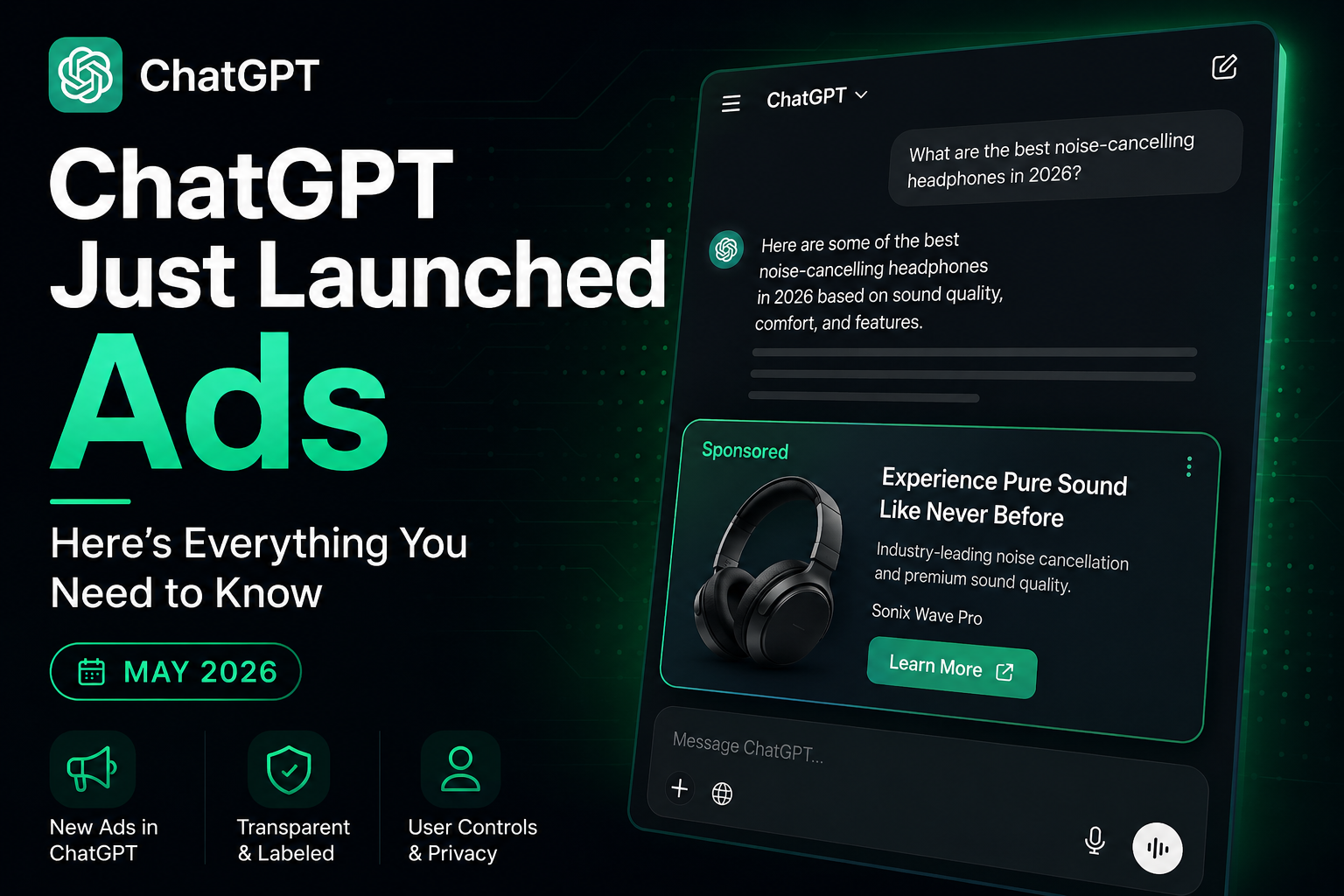
ChatGPT ads are sponsored placements shown separately from AI-generated answers inside ChatGPT’s interface.
Unlike traditional banner ads, these ads are designed to look more contextual and relevant to the conversation. OpenAI says they are clearly labeled as sponsored content and do not directly modify the assistant’s answers.
The rollout currently focuses mainly on:
| Feature | Details |
|---|---|
| Ad Placement | Separate sponsored section below responses |
| Target Users | Mostly Free and Go plan users |
| Premium Plans | Plus, Pro, and Enterprise remain ad-free |
| Labeling | Clearly marked as Sponsored |
| Ad Control | Users can hide or report irrelevant ads |
The biggest takeaway is simple: ChatGPT running ads are separate from the AI response itself.
Why OpenAI Introduced Ads In ChatGPT
Running AI systems at global scale is expensive.
From GPU infrastructure to real-time inference costs, platforms like ChatGPT process billions of prompts every month. Introducing ChatGPT ads creates a new revenue stream while keeping free access available for millions of users.
Here are the likely reasons behind the move:
1. Rising AI Infrastructure Costs
AI models require huge computing resources. Ads help offset those operational costs.
2. Keeping the Free Tier Alive
Instead of locking everything behind subscriptions, OpenAI can continue offering a free version supported partly through advertising.
3. Competing With Search Engines
Google built a trillion-dollar business around search ads. AI search platforms are now entering the same space.
4. Monetizing AI Discovery
As users shift from traditional search engines to AI assistants, brands want visibility inside AI conversations.
That’s where ChatGPT’s ads become strategically important.
How ChatGPT Ads Actually Work
OpenAI says ads are displayed separately from AI answers and are clearly labeled.
The current system appears to work like this:
- User asks a question
- ChatGPT generates a normal response
- A sponsored section may appear below the answer
- Users can interact with or dismiss the ad
Example Scenario
A user asks:
“Best laptops for video editing”
ChatGPT may provide its normal recommendations first.
Below the response, a sponsored placement could appear from a laptop brand or retailer.
This structure is important because OpenAI claims the AI answer itself is not being rewritten for advertisers.
Will ChatGPT’s Ads Affect AI Answers?
This is currently the biggest concern around ChatGPT’s ads.
OpenAI states that ads do not influence the assistant’s responses and remain visually separate from generated answers.
However, many users are still skeptical because:
- AI assistants feel more personal than search engines
- Users often trust conversational responses more deeply
- Sponsored placements inside AI chats could shape decisions indirectly
The real long-term question is whether future AI advertising models stay clearly separated or become more integrated into AI recommendations.
For now, OpenAI says:
- Ads are labeled
- Responses are independent
- Advertisers cannot edit AI answers
- Conversations are not sold to advertisers
Who Will See ChatGPT Ads?
At the moment, ChatGPT ads mainly appear for:
| Plan Type | Ads? |
|---|---|
| Free Plan | Yes |
| Go Plan | Yes |
| Plus | No |
| Pro | No |
| Enterprise | No |
This mirrors how many digital platforms handle monetization:
- Free users see ads
- Paid users get an ad-free experience
If you’re already subscribed to ChatGPT Plus or Pro, you likely won’t notice any changes.
Can Users Disable or Hide ChatGPT Ads?
Users cannot fully disable ads on free plans, but they can manage them.
Available controls include:
- Hide this ad
- Report ad
- Mark ad as irrelevant
- Adjust ad preferences in settings
This gives users at least some control over the advertising experience.
Privacy Concerns Around ChatGPT Ads
Whenever ads appear in AI products, privacy questions immediately follow.
The main concerns include:
Are conversations used for targeting?
OpenAI says conversations are not sold to advertisers.
Do advertisers access user chats?
According to OpenAI, advertisers do not get direct access to private conversations.
Can AI responses become biased?
This remains a broader industry concern, especially as AI monetization evolves.
For many users, transparency will determine whether ChatGPT ads feel acceptable or intrusive.
What ChatGPT Ads Mean for SEO
This is where things become very interesting.
Traditional SEO focused on ranking in Google search results.
Now businesses are thinking about:
- AI visibility
- AI citations
- AI recommendation placement
- Sponsored AI discovery
The rise of ChatGPT ads could create an entirely new marketing category similar to search advertising.
Potential Future Trends
| Trend | Impact |
|---|---|
| AI Sponsored Results | Brands pay for visibility |
| Conversational Commerce | AI becomes shopping assistant |
| AI SEO | Optimizing content for AI answers |
| Contextual Recommendations | Ads tied to conversation intent |
Marketers are already preparing for this shift.
Pros and Cons of ChatGPT Ads
Pros
- Keeps ChatGPT free for millions
- Creates new business opportunities
- Could improve product discovery
- Supports platform growth
Cons
- Users may trust AI less
- Risk of ad overload in future
- Potential influence on recommendations
- Privacy concerns remain
The success of ChatGPT ads will depend heavily on moderation and transparency.
Comparison: ChatGPT Ads vs Google Ads
| Feature | ChatGPT Ads | Google Ads |
|---|---|---|
| Format | Conversational | Search-based |
| Placement | Inside AI interface | Search result pages |
| Interaction | Contextual | Keyword-driven |
| User Intent | Conversation intent | Search intent |
| Discovery Style | AI-assisted | Link-based |
This difference could reshape how users discover products online.
Video: What ChatGPT Ads Could Mean for the Future of AI
(Embed a YouTube explainer video here ideally discussing AI search monetization or OpenAI advertising.)
Suggested video topics:
- AI search vs Google search
- OpenAI monetization strategy
- Future of conversational advertising
- AI SEO explained
Suggested Feature Image
Use a clean tech-style image showing:
- ChatGPT interface
- Sponsored ad section
- AI conversation bubbles
- Modern futuristic UI
- Green and dark theme
Alt text:
“ChatGPT ads interface showing sponsored AI recommendations in May 2026”
FAQ Section
Are ChatGPT ads available for everyone?
No. Currently, ChatGPT ads mainly appear for Free and Go plan users.
Do ChatGPT Plus users see ads?
No. Plus, Pro, and Enterprise plans are currently ad-free.
Can advertisers influence ChatGPT answers?
OpenAI says advertisers cannot directly modify AI-generated responses.
Are ChatGPT ads personalized?
Some ads may be contextually relevant based on conversations, but OpenAI says private conversations are not sold to advertisers.
Can I turn off ChatGPT’s ads?
Free users cannot completely disable ads, but they can hide or report individual ads.
Why did OpenAI launch ChatGPT ads?
The likely reasons include infrastructure costs, monetization, and competing with traditional search advertising models.
Final Thoughts
The launch of ChatGPT ads marks a major moment in the evolution of AI platforms.
For users, this introduces a new balance between free access and monetization.
For marketers, it opens the door to AI-native advertising strategies.
And for the broader tech industry, it signals that conversational AI is becoming a serious competitor to traditional search engines.
Whether users embrace or reject ChatGPT’s ads will depend on one thing above all else: trust.
If ads remain transparent, separate, and non-intrusive, many users may accept them as the cost of free AI access. But if advertising starts influencing AI recommendations too heavily, backlash could arrive quickly.
One thing is clear: AI advertising is no longer theoretical it has officially begun.